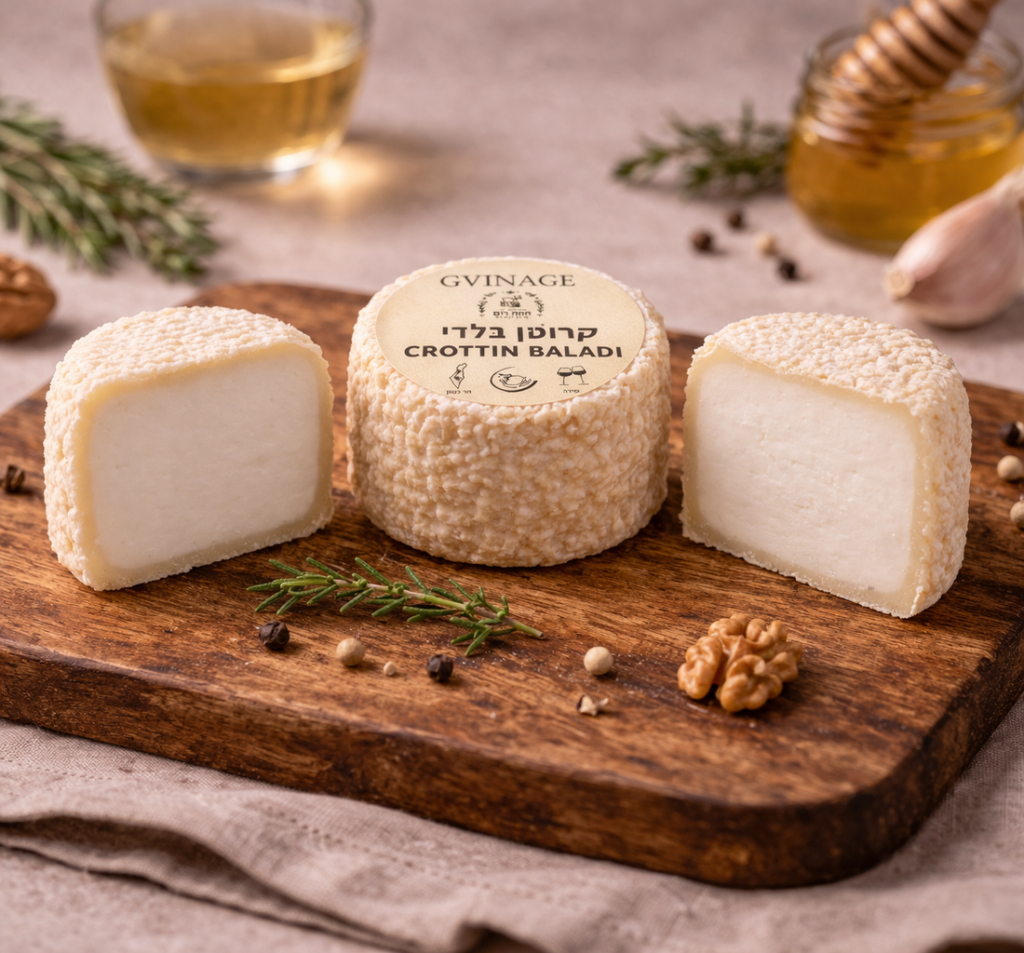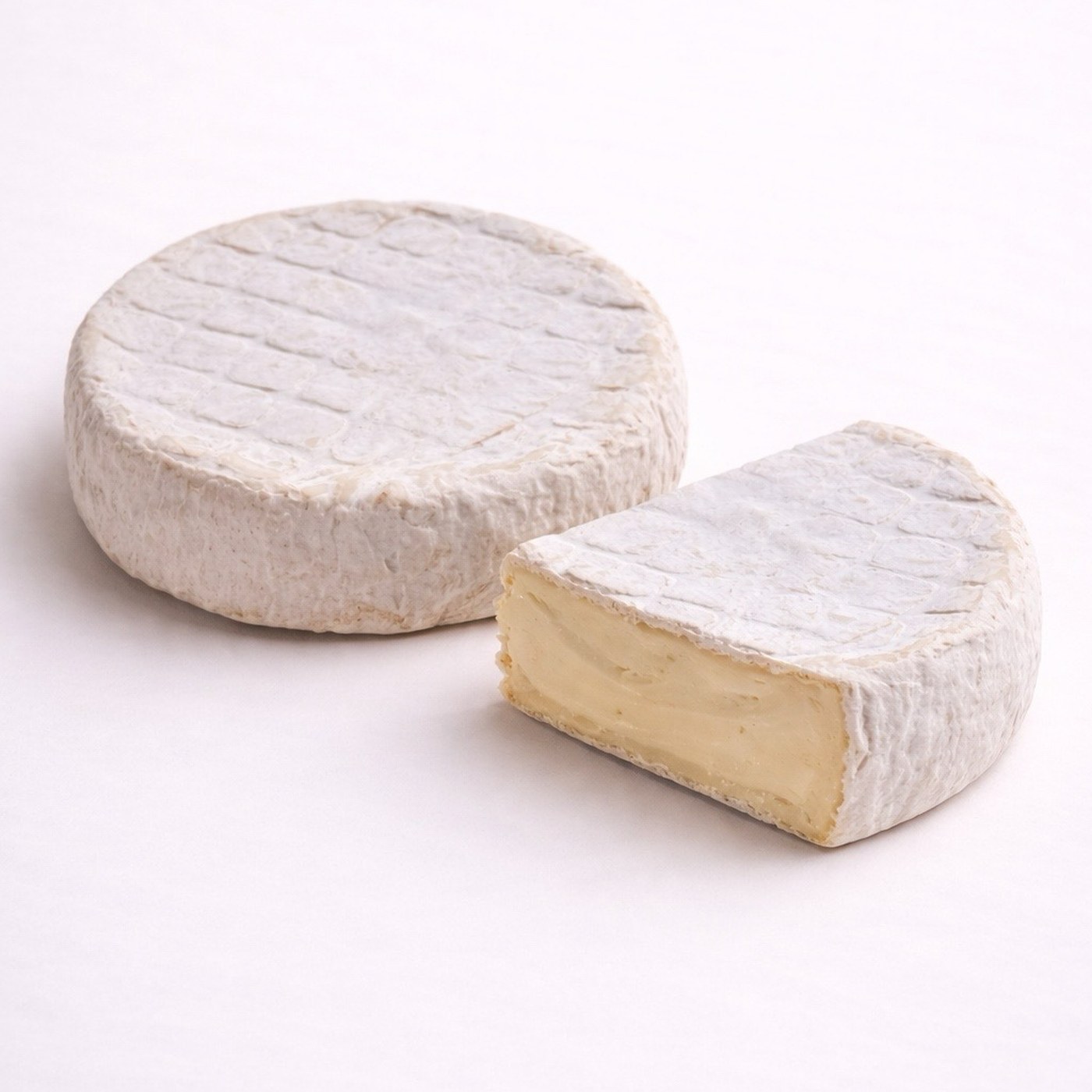
A soft cheese made from 100% pasteurized goat milk, ripened for two weeks with Penicillium candidum and the dairy’s secret blend of starter cultures. A white-mould coat and an especially creamy heart, which turns almost runny at its peak ripeness.
 Goat milk
 Gold medal in its category · Mondial du Fromage, France
Its inspiration
An especially soft and creamy goat cheese, inspired by the bloomy-rind cheese tradition of Normandy.
Making and ripening
Made from 100% pasteurized goat milk, ripened for two weeks under controlled conditions with Penicillium candidum and the dairy’s secret blend of starter cultures. The combination of cultures creates the white coat and drives ripening that moves from the rind towards the centre. Early in its life the centre is relatively firm, with a soft, glossy layer developing around it; as it ripens the texture becomes creamy, melting and sometimes almost runny.
Taste and aromas
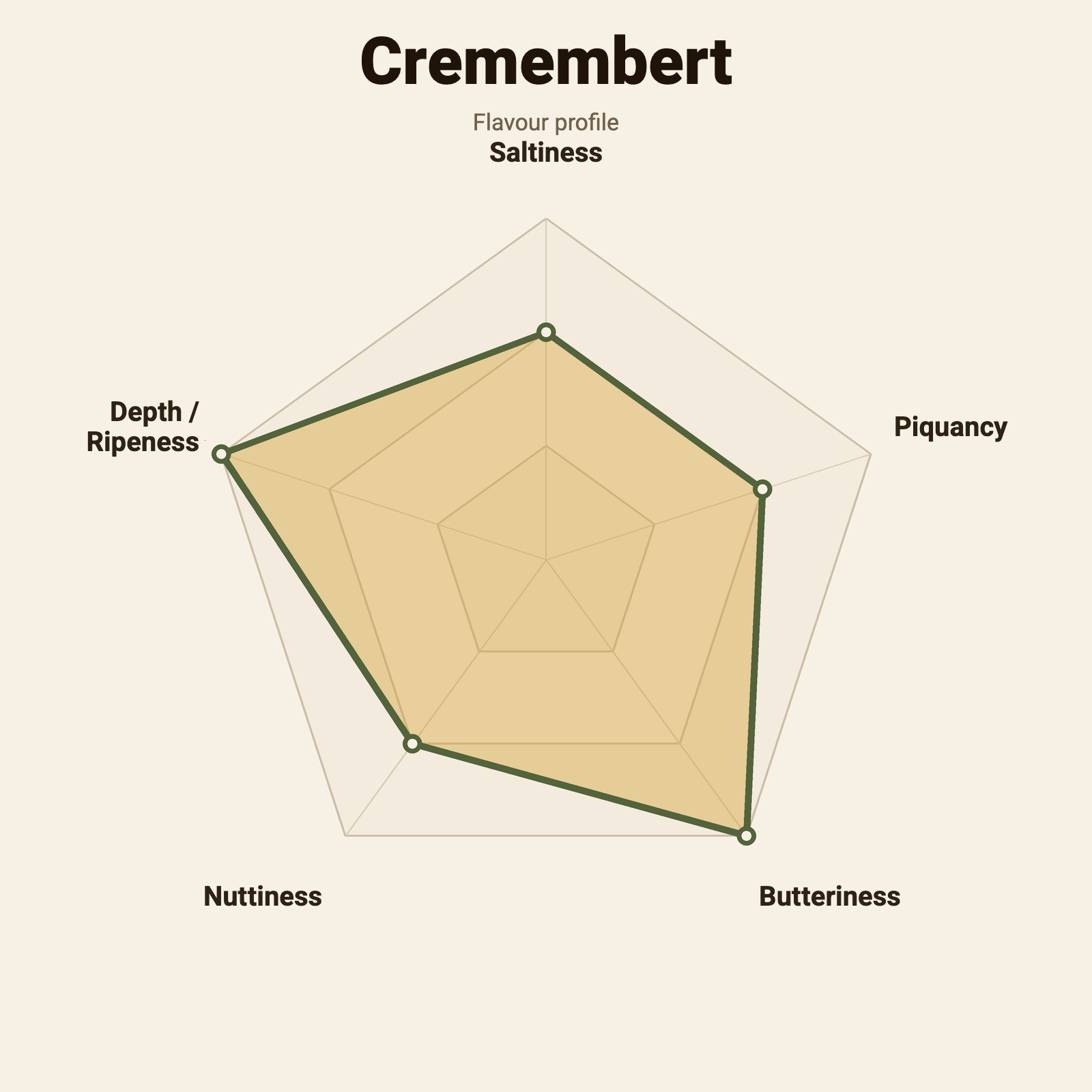
When young it is fresh, milky and delicate. As it ripens the texture softens and the flavours deepen — alongside the milky, buttery character, delicate mushroomy and earthy notes develop, adding complexity without hiding the character of the goat milk.
Serving suggestion
Take it out of the fridge about 20–30 minutes ahead so the texture softens and the aromas open up. Cut into wedges so that every portion includes rind and heart. Ideal for a cheese board, with baguette, sourdough or neutral crackers, and with apples, pears, grapes, nuts or a little honey. You can also bake it whole briefly and serve it warm and melting.
“As someone born and raised in France, Camembert was always one of those basic cheeses that is permanently in the fridge. For years I asked myself how I could create a Camembert of my own — a cheese that would express not only the place I came from, but also the journey I made and the place where I create today. After many trials I arrived at the winning recipe for “Cremembert”. And yes, it’s not a spelling mistake: the name is a play on words joining the creaminess of the cheese with French Camembert. My Cremembert is a lactic goat cheese, delicate and creamy, inspired by the classic Camembert, which is made from cow’s milk. The pasture flavours of goat milk give it a distinctly local character and a connection to the landscape where it was created, while its soft texture and refined flavours keep the French memory I came from. In 2025 Cremembert represented us at the international cheese competition Mondial du Fromage in France and won a gold medal. For me, the win was far more than a professional achievement: it was French recognition of a cheese that tells my personal journey — from France to the Galilee, from the familiar Camembert to the beloved Cremembert.”
— Naomi Richard Stein, certified Master Cheesemaker, GVINAGE
Frequently asked questions about Cremembert
What is Cremembert made from, and how long does it ripen?
Made from 100% pasteurized goat milk, ripened for two weeks under controlled conditions with Penicillium candidum and the dairy’s secret blend of starter cultures. The combination of cultures creates the white coat and drives ripening that moves from the rind towards the centre. Early in its life the centre is relatively firm, with a soft, glossy layer developing around it; as it ripens the texture becomes creamy, melting and sometimes almost runny.
How should I serve Cremembert, and with which wine?
Take it out of the fridge about 20–30 minutes ahead so the texture softens and the aromas open up. Cut into wedges so that every portion includes rind and heart. Ideal for a cheese board, with baguette, sourdough or neutral crackers, and with apples, pears, grapes, nuts or a little honey. You can also bake it whole briefly and serve it warm and melting. Recommended wine pairing: Chardonnay.
How should I store Cremembert at home?
Wrap it in baking paper or parchment — not cling film, which suffocates the cheese and gives it an aftertaste — and place it loosely in a bag or box in the fridge, so the cheese can breathe without trapping excess moisture. The full guide: How to store cheese at home.
Want to learn to make cheese yourself?
On the professional cheesemaking course at Rom Farm you also make soft cheeses such as camembert and brie, and learn the art of ageing. 4 sessions in December 2026.