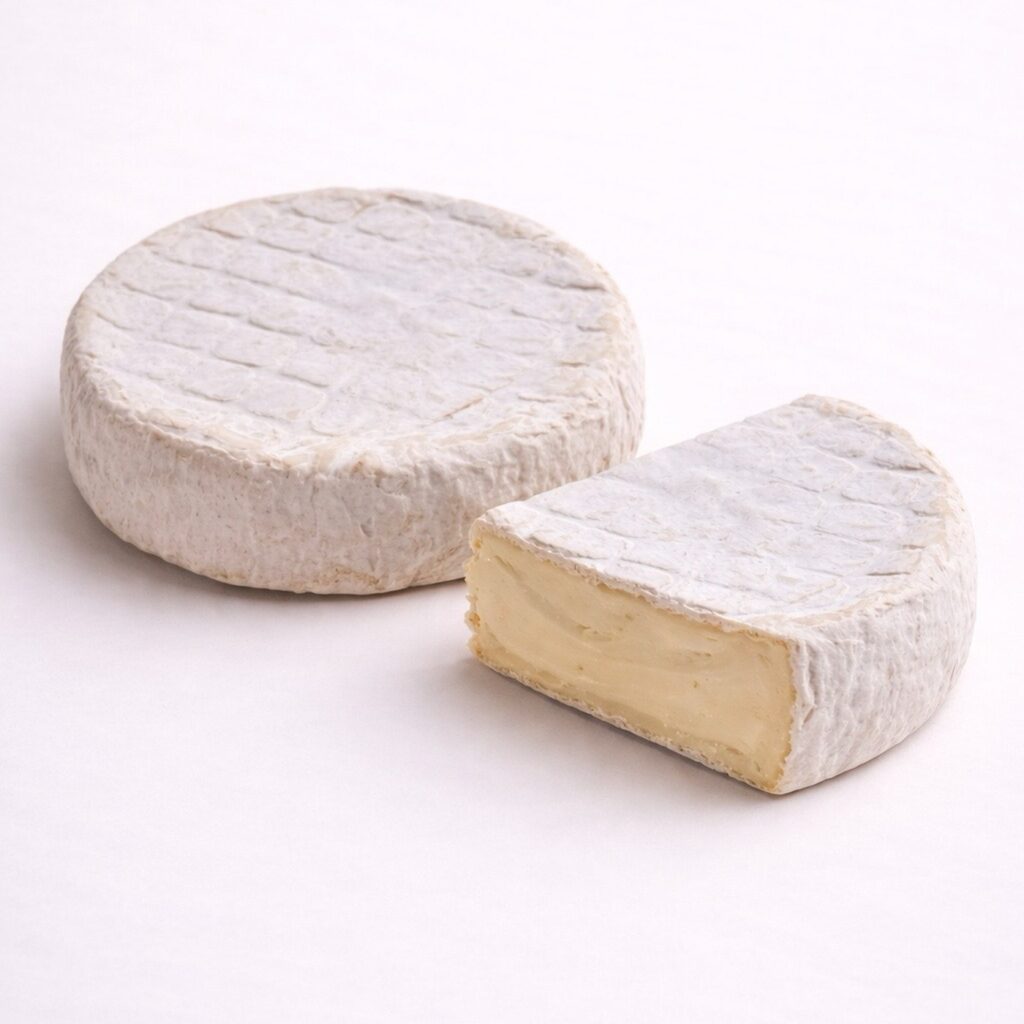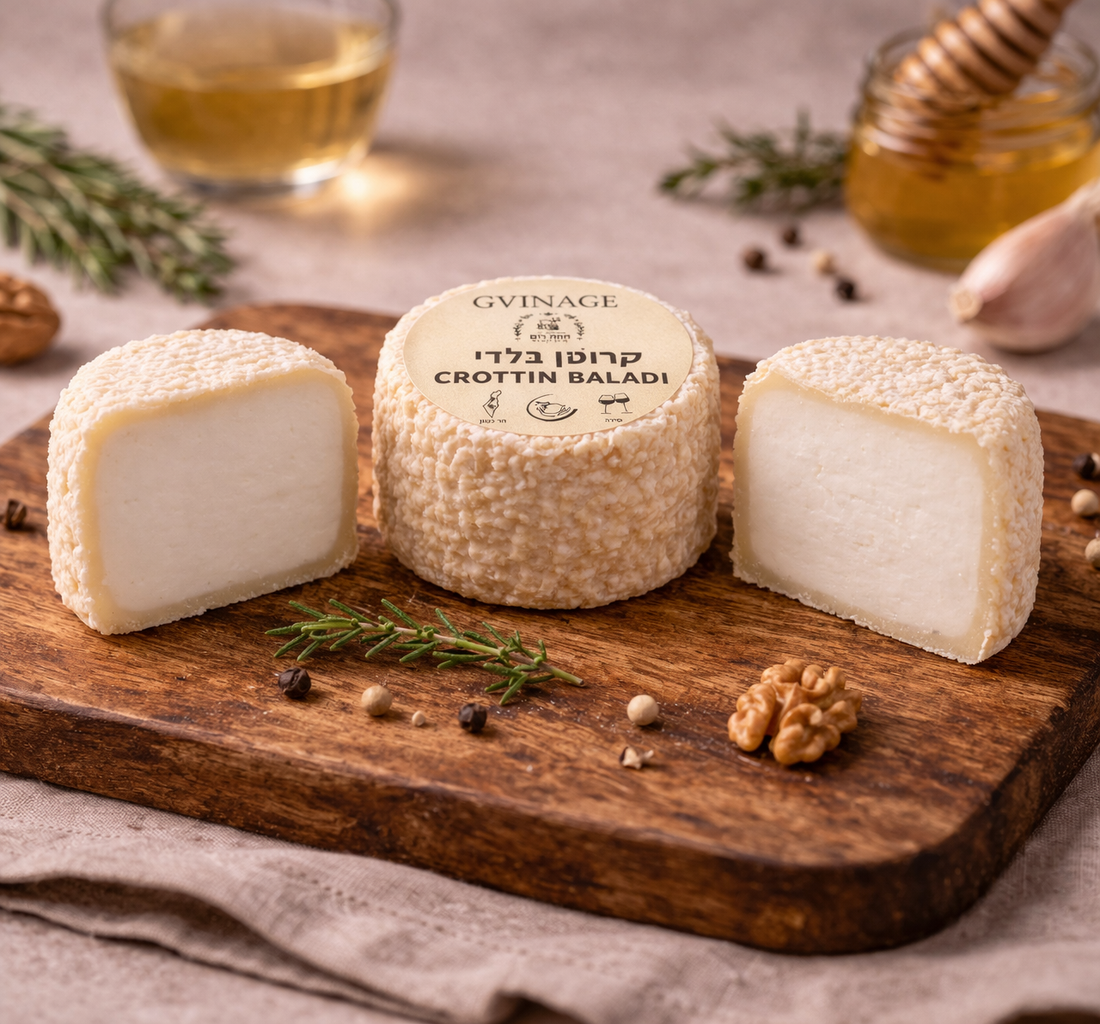
Crottin Baladi is a small, ripened goat cheese made from 100% pasteurized goat milk. It ripens for at least two weeks and reaches its peak after about a month. Its rind is edible and develops with the help of a secret blend of cultures.
 Goat milk
Its inspiration
A small, ripened goat cheese that combines inspiration from the traditional crottin cheeses of France’s Loire Valley with the goat milk and local character of the Galilee.
Making and ripening
Made from 100% pasteurized goat milk and shaped into a small cheese of about 180 g. It ripens for at least two weeks and reaches its peak after about a month. During this time a natural rind develops on its surface with the help of the dairy’s secret blend of cultures. The rind is edible and an important part of the flavour, aroma and texture.
Taste and aromas
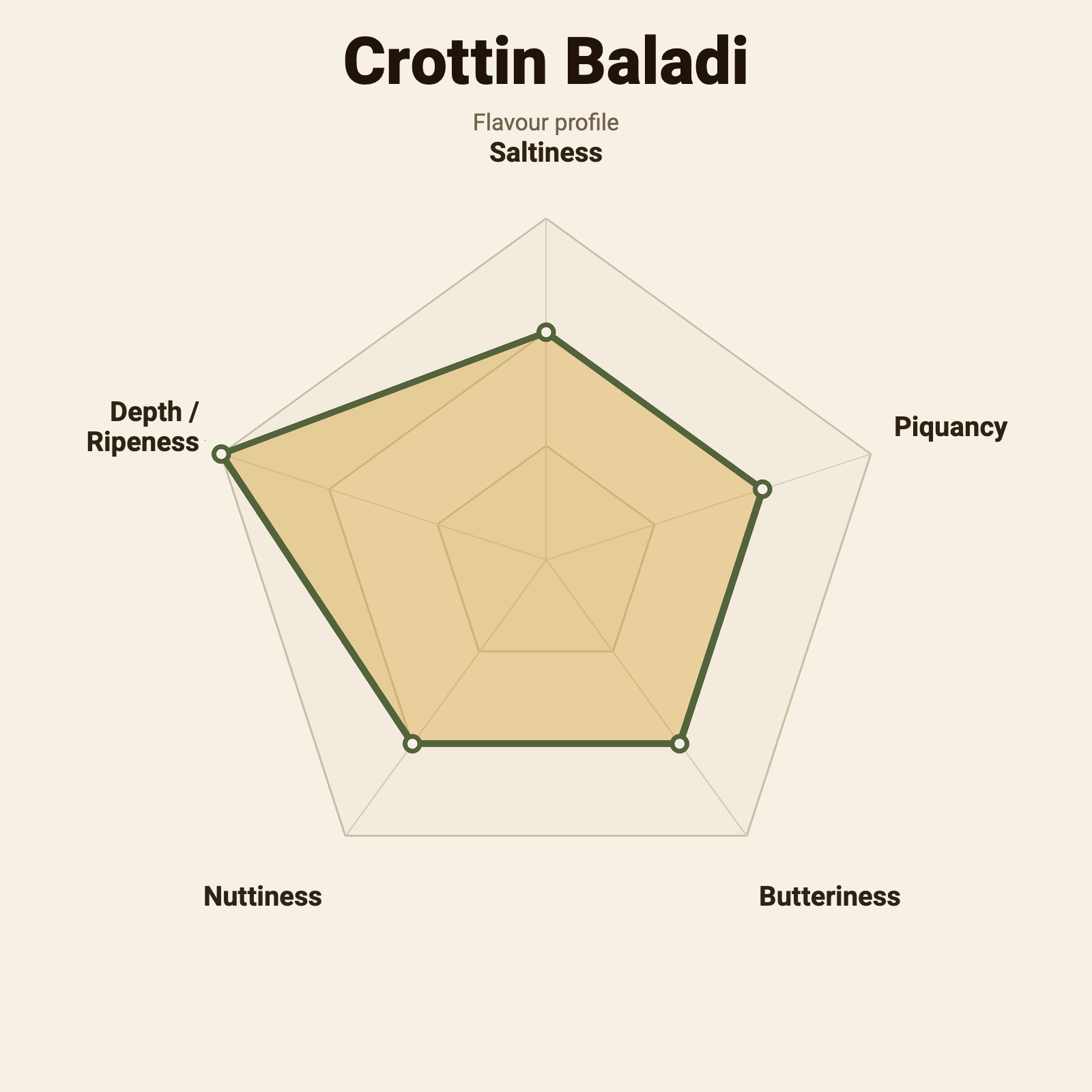
At its peak (after about a month) there is a balance between the aromatic rind and the ripe centre — the texture becomes firmer and slightly more crumbly, and the flavours develop towards nutty, herbal and earthy notes, alongside the fresh character of goat milk.
Serving suggestion
Take it out of the fridge about 20 minutes before serving. Serve it whole or cut into wedges that include the rind, with baguette, sourdough bread or delicate crackers, and with honey, nuts, apples, pears and figs. Also good in salads and sandwiches, or placed on a slice of bread and briefly toasted.
“Crottin is one of the goat cheeses most closely associated with the French countryside: a small, modest-looking cheese that manages to change and surprise as it matures. When young it is soft, fresh and delicate; with time it firms up, its flavour deepens and its rind takes on a character of its own.
The cheese’s name probably comes from the word Crot in the dialect of the Berry region, meaning “hole”. That was the name for the places on the riverbanks where people used to wash clothes. From the clay soil found there they made, among other things, the small moulds in which the cheeses were shaped. So, contrary to what is often thought, the name has nothing to do with how the cheese looks, but with the vessel in which it was made.
When I set out to create our crottin, I felt that the connection to goat milk was already at the heart of the cheese. The challenge was not to replace the raw material, but to translate the cheese from one terroir to another — from the hills of central France to the pastures of the Galilee.
Our crottin is a small lactic cheese with a delicate texture and clean goat flavours, accompanied by the aromas of the local pasture. When young it is moist, soft and fresh; as it ripens it becomes firmer and more concentrated, and its flavours grow deep and complex. It is a cheese that keeps developing even after it leaves the dairy — and every stage of its life offers a slightly different experience.
For me, the crottin tells a story of translation: a French tradition that finds a new voice through the milk of our goats, the seasons and the Galilean soil. Hence its name — “Crottin Baladi”: as in Brik Baladi, the Arabic word “baladi” means local, of the place.”
— Naomi Richard Stein, certified Master Cheesemaker, GVINAGE
Frequently asked questions about Crottin Baladi
What is Crottin Baladi made from, and how long does it ripen?
Made from 100% pasteurized goat milk and shaped into a small cheese of about 180 g. It ripens for at least two weeks and reaches its peak after about a month. During this time a natural rind develops on its surface with the help of the dairy’s secret blend of cultures. The rind is edible and an important part of the flavour, aroma and texture.
How should I serve Crottin Baladi, and with which wine?
Take it out of the fridge about 20 minutes before serving. Serve it whole or cut into wedges that include the rind, with baguette, sourdough bread or delicate crackers, and with honey, nuts, apples, pears and figs. Also good in salads and sandwiches, or placed on a slice of bread and briefly toasted. Recommended wine pairing: Sauvignon Blanc.
How should I store Crottin Baladi at home?
Wrap it in baking paper or parchment — not cling film, which suffocates the cheese and gives it an aftertaste — and place it loosely in a bag or box in the fridge, so the cheese can breathe without trapping excess moisture. The full guide: How to store cheese at home.