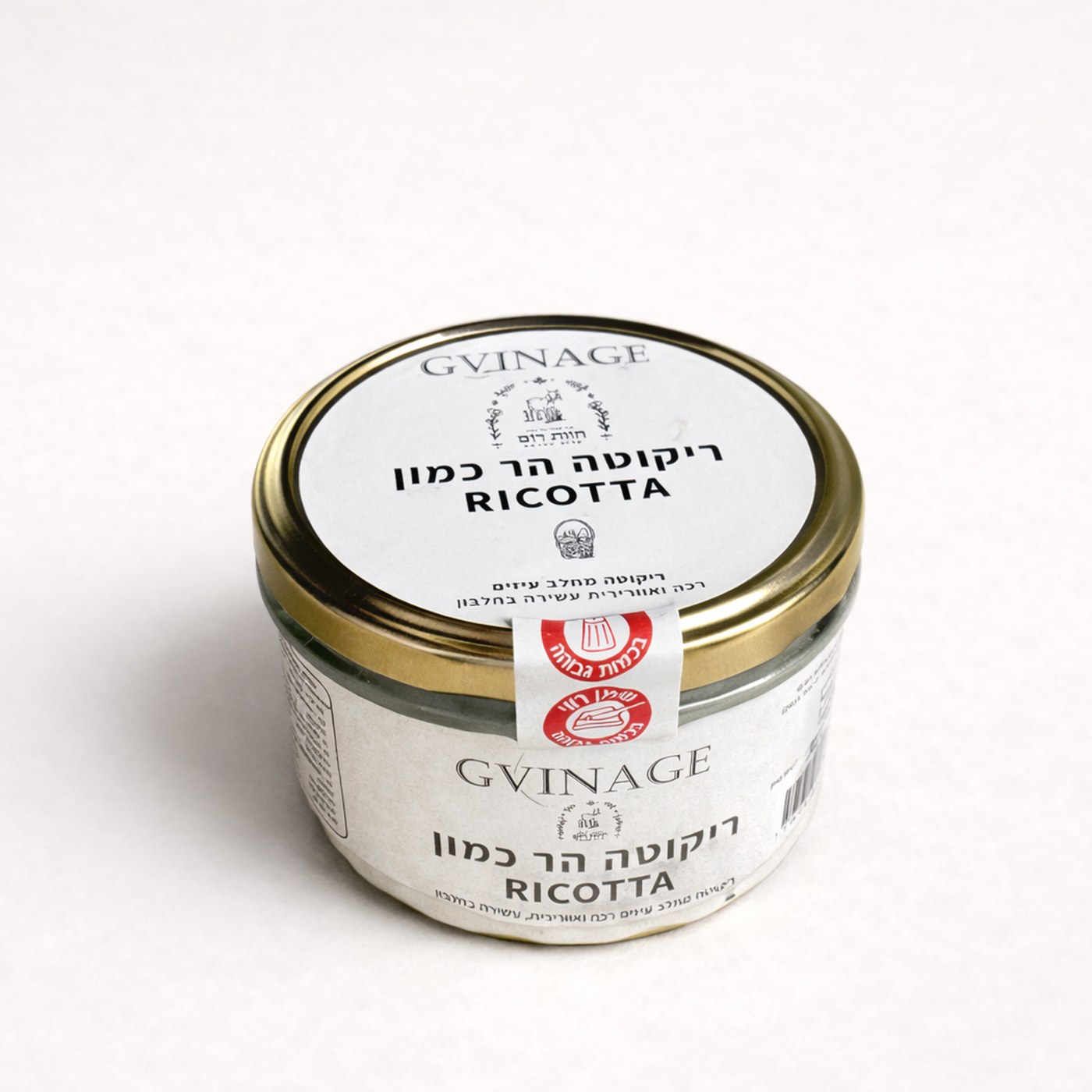
Ricotta is a fresh goat cheese made from whey enriched with pasteurized goat milk, with no added salt. It has a soft, airy texture and a clean, delicate milky flavour. Per 100 g: 11 g protein and 250 mg calcium.
 Goat milk
Its inspiration
Its name comes from the Italian word ricotta, meaning “re-cooked” — in the making, the whey left over from other cheeses is reheated and its proteins are gathered as delicate flakes.
Making and ripening
A fresh, soft, protein-rich goat cheese made from whey enriched with pasteurized goat milk. It is not aged and is meant to be eaten fresh, to preserve its milky flavour, airy texture and nutritional value. No salt is added — so the natural taste of the milk is preserved.
Taste and aromas
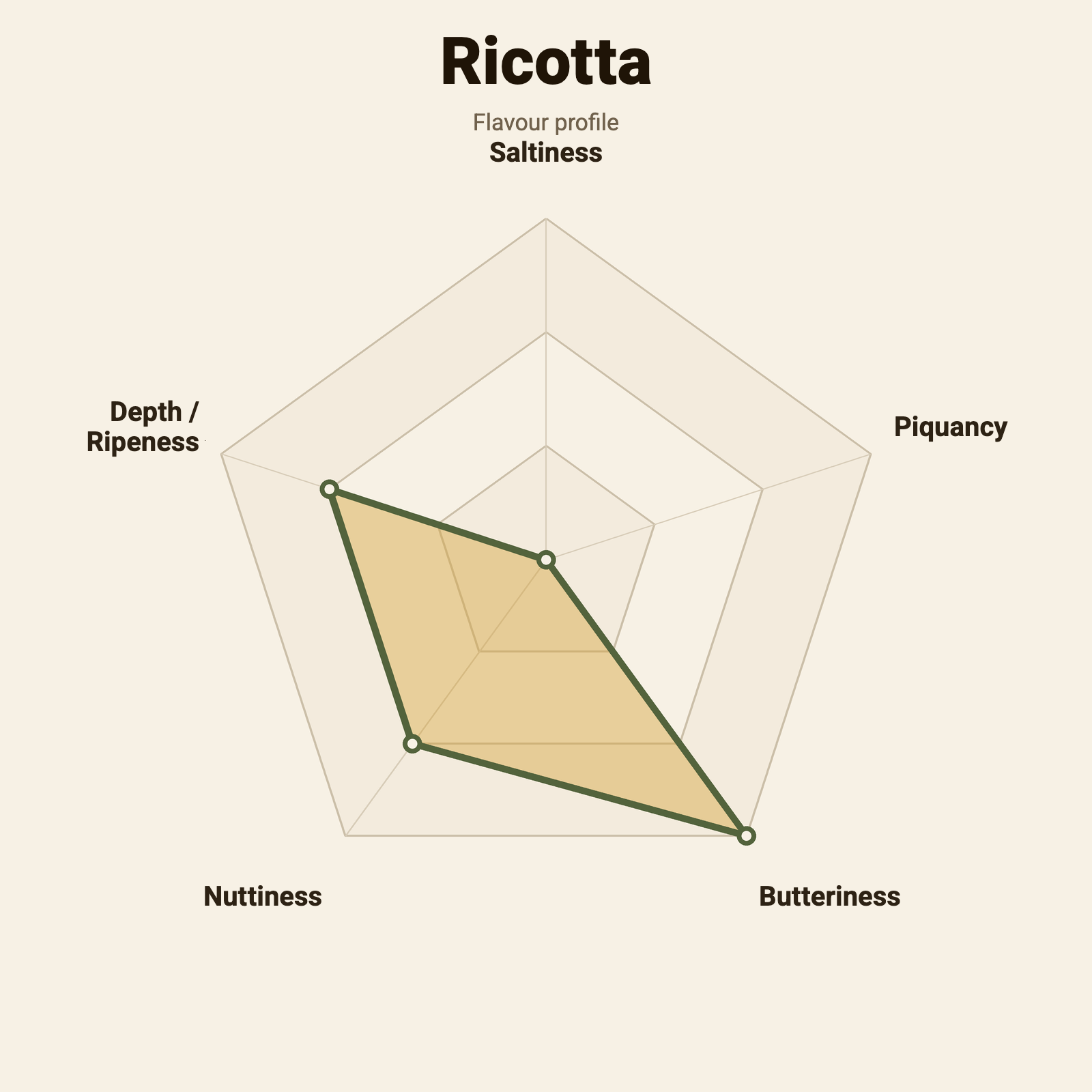
A soft, light and airy texture, with the delicate graininess typical of ricotta; draining leaves it pleasantly moist. Its flavour is milky, clean and fresh, with a gentle natural sweetness.
Serving suggestion
For a savoury serving: olive oil, tomatoes, fresh vegetables, herbs and bread. For a sweet serving: honey, fruit, nuts, cinnamon or citrus zest. In the kitchen: filling for ravioli and cannelloni, lasagne, pasta, pastries, quiches and fritters; on the sweet side — cheesecakes, crêpes, desserts and knafeh. Best served fresh.
“Ricotta is a cheese that tells a story of listening and of making full use of the raw material. Its name comes from the Italian word Ricotta, meaning “re-cooked”: after a cheese is made, the leftover whey is heated once more, and soft, delicate white flakes rise to the surface.
I have always loved the idea behind ricotta — the ability to discover that even in what seems left over at the end of the process, something wonderful is hiding. It is a cheese born of modesty and of respect for the milk: wasting nothing, listening to the raw material and drawing from it everything it can give.
Our ricotta is made from the whey of local goat milk, so it also carries the story of the cheeses made before it. It is white and soft, with a cloud-like texture and a milky, fresh, slightly sweet flavour. You can eat it as it is, spread it on bread or use it in sweet and savoury dishes — but to my mind, the best way to get to know it is fresh and simple, with almost nothing added.
For me, ricotta expresses the essence of work in the dairy: patience, attention and respect for every drop of milk. It proves that sometimes, at the very end of a process, a new beginning is hiding — delicate, clean and full of life.”
— Naomi Richard Stein, certified Master Cheesemaker, GVINAGE
Frequently asked questions about Ricotta
What is Ricotta made from?
A fresh, soft, protein-rich goat cheese made from whey enriched with pasteurized goat milk. It is not aged and is meant to be eaten fresh, to preserve its milky flavour, airy texture and nutritional value. No salt is added — so the natural taste of the milk is preserved.
How should I serve Ricotta, and with which wine?
For a savoury serving: olive oil, tomatoes, fresh vegetables, herbs and bread. For a sweet serving: honey, fruit, nuts, cinnamon or citrus zest. In the kitchen: filling for ravioli and cannelloni, lasagne, pasta, pastries, quiches and fritters; on the sweet side — cheesecakes, crêpes, desserts and knafeh. Best served fresh. Recommended wine pairing: Sauvignon Blanc.
How should I store Ricotta at home?
Wrap it in baking paper or parchment — not cling film, which suffocates the cheese and gives it an aftertaste — and place it loosely in a bag or box in the fridge, so the cheese can breathe without trapping excess moisture. The full guide: How to store cheese at home.